
Sub-Total: $0.00
How to Care for a Sourdough Starter
Feeding, Maintaining, and Preparing It for Baking
One of the first questions new sourdough bakers ask is:
“How do I keep my starter healthy?”
At first, maintaining a sourdough starter can feel overwhelming. But once you understand the rhythm of feeding and fermentation, it becomes surprisingly simple.
In my working kitchen, I bake dozens of loaves of sourdough every week, and over time I’ve found a few habits that keep my starter strong, active, and reliable.
This guide will walk you through how to care for your starter, how often to feed it, and how I prepare mine before baking day.
What Is a Sourdough Starter?
A sourdough starter is a mixture of flour and water that contains a live culture of wild yeast and beneficial bacteria.
These microorganisms are what cause sourdough bread to ferment and rise naturally.
With regular feedings, the yeast multiplies and produces the gas that creates light, airy bread.
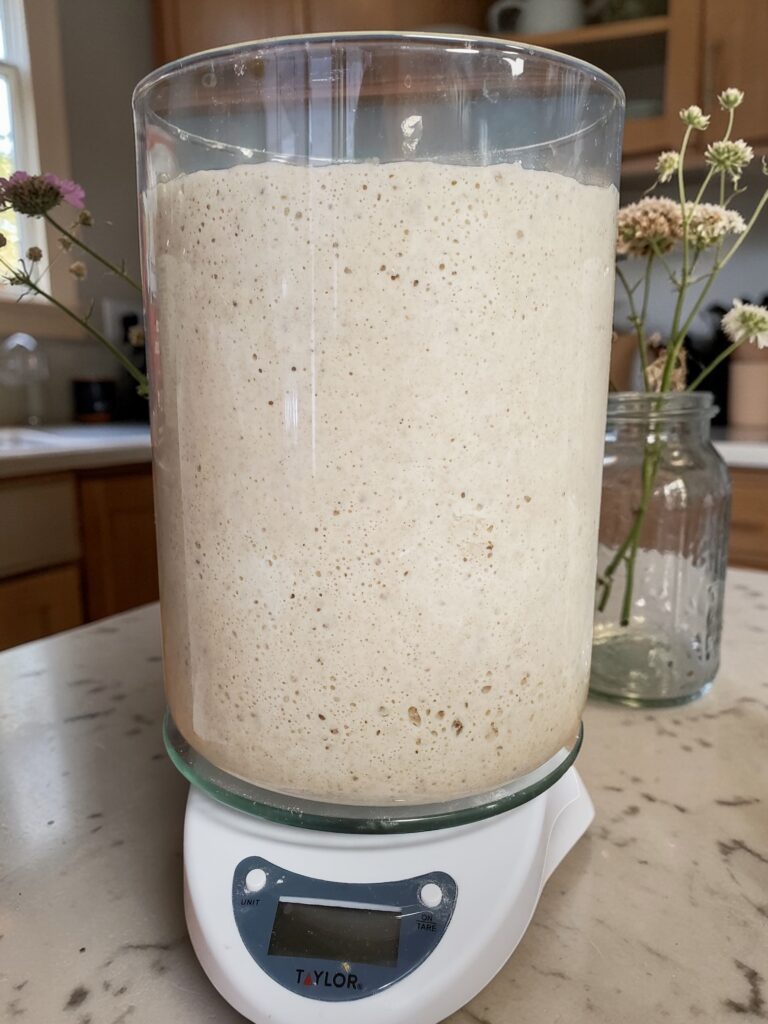
I always get asked about these jars. They are my favorite for small and medium amounts of starter. I love that the sides are straight so its easier to clean and stir.
Understanding Starter Feeding Ratios
Starter feeding ratios are written like this:
Starter : Flour : Water
For example:
1 : 4 : 4
That means:
- 1 part starter
- 4 parts flour
- 4 parts water
A typical minimum feeding in my kitchen looks like this:
20g starter
80g flour
80g water
This keeps the starter active while still maintaining a manageable jar size.
A weak or underfed starter is one of the most common reasons sourdough bread turns out dense or flat.
I talk more about this and other common issues in my post Beginner Sourdough Mistakes (Why Your Loaf Is Flat, Dense, or Gummy) where I break down the problems many new bakers run into.
👉Beginner Sourdough Mistakes: Why Your Loaf Is Flat, Dense, or Gummy (And How to Fix It)
How Often Should You Feed a Starter?
If your starter is kept on the counter at room temperature, it’s best to feed it at least once every 24 hours.
A healthy starter will typically:
- rise after feeding
- reach a peak
- then slowly begin to fall
Once it begins falling, it means the starter has run out of food.
If this happens long before your next feeding, increasing the feeding ratio can help keep the starter happy longer.
For example:
1:3:3
1:4:4
1:5:5
1:6:6
Larger feedings provide more food for the yeast.
My Simple Daily Starter Routine
When I’m not baking, I keep my starter fairly small.
I usually discard most of the jar and leave about 20 grams of starter, then feed it using this ratio:
20g starter
100g water
100g flour
In a warm kitchen this typically doubles and begins falling again within 10-12 hours.
If your starter peaks very quickly, you can either:
- increase the feeding ratio
- or feed more often (such as every 12 hours)
The Best Time to Use Your Starter
The best time to bake with your starter is right after it reaches its peak.
At this point:
- the yeast population has fully multiplied
- fermentation activity is strongest
Signs your starter is ready:
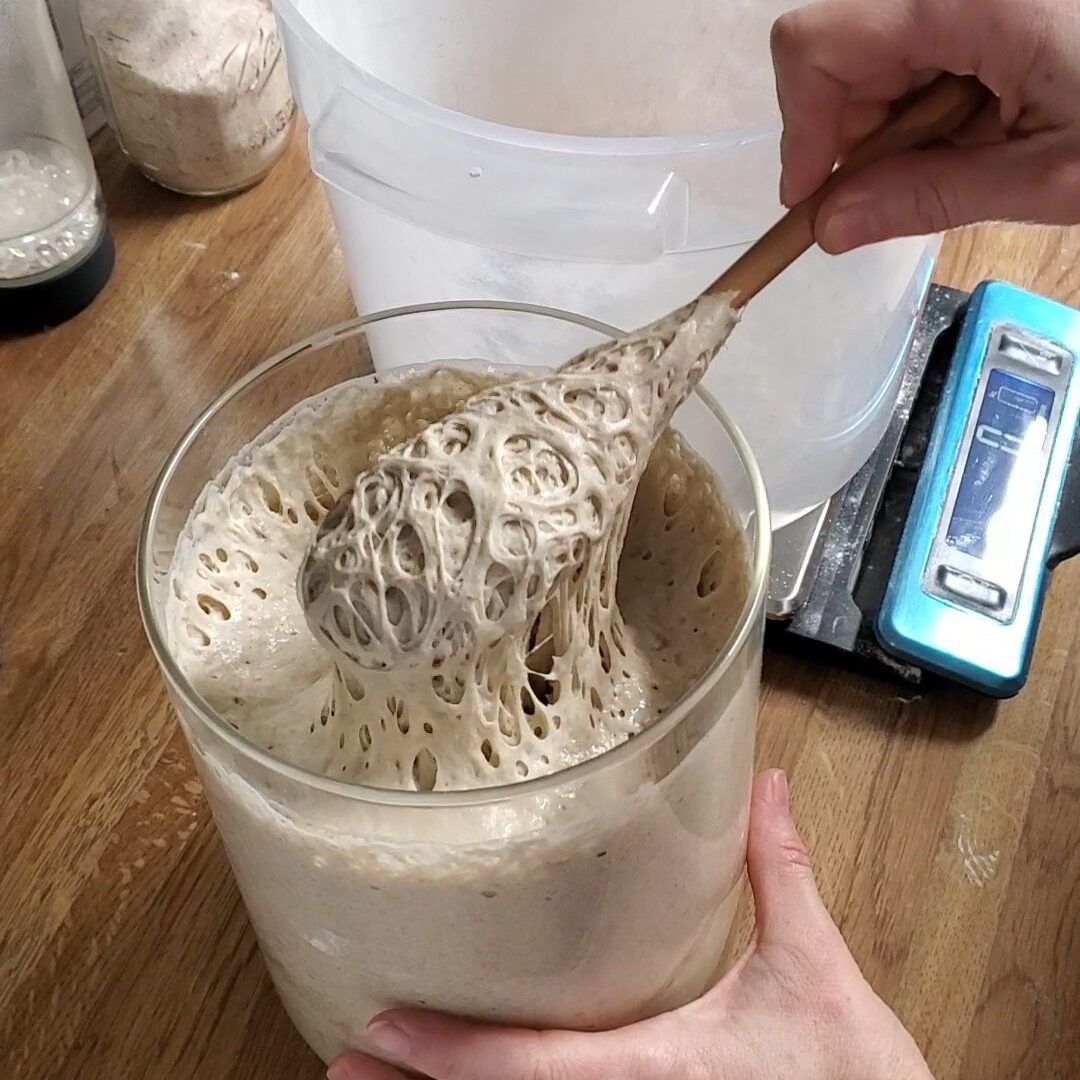
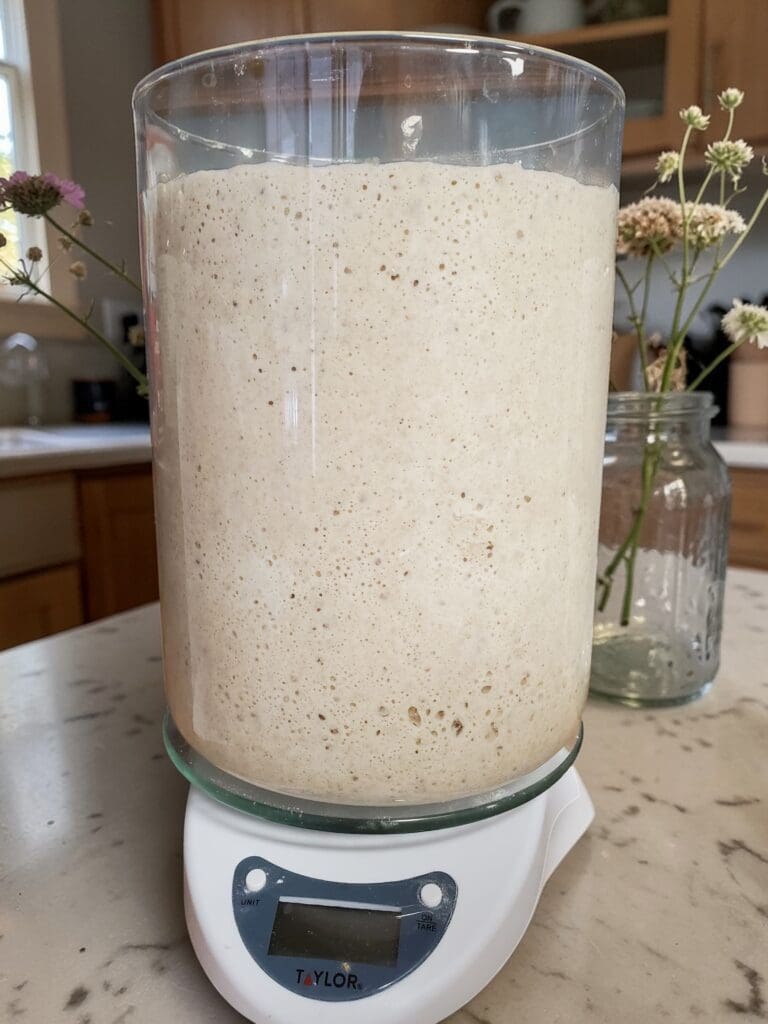
- doubled or more in size
- bubbly throughout
- it was slightly domed on top but now has started to level out
- pleasantly tangy smell
Using your starter too early means the yeast hasn’t fully developed yet.
Waiting too long means the starter may already be starving.
Once your starter reaches its peak and becomes bubbly and active, it’s ready to use in a recipe.
Pro Tip: When in Doubt, Wait for the Fall
If you’re unsure whether your starter is ready to use, it’s usually better to wait until it has just passed its peak and started to fall slightly.
A starter that is still rising may not have had enough time for the yeast population to fully develop. Waiting until peak ensures the yeast has multiplied and the starter is at full strength.
In my experience, a slightly hungry starter performs better than an immature starter that hasn’t finished developing.
So if you’re ever unsure, it’s safer to wait for the starter to begin falling slightly rather than using it too early.
If you’re looking for a simple place to start, I walk through my full process in my Simple Farmhouse Sourdough Bread Recipe, including mixing, stretch and folds, fermentation, shaping, and baking.
👉Simple Farmhouse Sourdough Bread Recipe (Beginner-Friendly + Digestible)
My Double-Feeding Technique Before Baking
When I’m planning to bake bread the next day, I always feed my starter twice the day before.
This helps build fermentation strength and ensures the starter is very active.
A typical prep schedule looks like this:
First Feeding
Earlier in the day around 10 or 11am.
1 : 1 : 1 ratio (10g starter : 10g flour : 10g water)
Second Feeding (Evening)
Around 8 or 9pm.
*Important note: I do not discard before this second feeding. I take the 30g of starter that I have from the morning feeding and feed it using the ratio below.
1 : 4 : 4 ratio
For example:
30g starter
120g water
120g flour
When I feed this ratio in the evening, my starter is usually at peak or just after peak about 12–13 hours later, which makes it perfect for mixing dough the next morning.
Temperature plays a big role, so this timing can vary depending on the season and how warm your kitchen is.
I break down and give more insight into this double feeding method in my the article below:
👉 The Double Feed Method: My Sourdough Starter Prep Routine
What Should You Feed Your Starter?
For the most reliable results I recommend:
- unbleached bread flour
- filtered water
Bleached flour and heavily chlorinated tap water can weaken the starter culture.
In my kitchen I feed my starter organic bread flour and reverse-osmosis water.
Optional Tip (but highly recommended): Adding Rye Flour
To keep my starter extra healthy, I always add a small amount of organic rye flour to every feeding. The amount I add is always 1/3 the total amount of flour. So as you can see in the example below, I am feeding 120g of flour so 40g of that is rye flour.
For example:
30g starter
120g water
40g rye flour
80g bread flour
Rye flour contains additional nutrients that wild yeast loves.
This step isn’t 100% necessary, but it can help strengthen fermentation over time. I really think this is one of the key things that I do to keep my starter so happy and healthy 😊.
*Note: Feeding your starter this way will not make your bread taste like rye bread 😉.
Storing Starter in the Refrigerator
If you plan to take a break from baking, your starter can be stored in the refrigerator.
Cold temperatures slow down fermentation, allowing the starter to go 1–2 weeks without feeding.
When you’re ready to bake again:
- Remove the starter from the fridge
- Discard and feed it
- Let it warm up and become active
After a feeding, it should normally be ready to bake with the next day. You can also use my double feed method above when you take it out of the fridge and it should be happy and ready to mix dough the next morning.
Essential Sourdough Tools (From My Kitchen)
Over the years of baking sourdough every week, I’ve learned that good bread doesn’t require a lot of fancy equipment — but there are a few tools that make the process much easier and more consistent.
These are the items I use regularly in my own kitchen when feeding my starter and preparing dough.
You can find the full list here:
👉 My Essential Sourdough Baking Tools
Some of the items I rely on most include:
• Digital kitchen scale
• Glass starter jars
• Dough whisk
• Banneton baskets
• Bread lame for scoring
• Cast iron Dutch oven
Having reliable tools removes a lot of guesswork from sourdough baking and helps create consistent results.
If you’re just starting out, you don’t need everything right away — but these are the items that have proven most useful during my weekly baking routine in my home micro-bakery.
Final Thoughts
Sourdough baking doesn’t require perfection.
What it does require is a healthy starter and a little patience.
Once you learn the rhythm of feeding and watching your starter rise and fall, maintaining it becomes second nature.
And before long, it becomes just another part of the rhythm of your kitchen.
Ready to Start Baking?
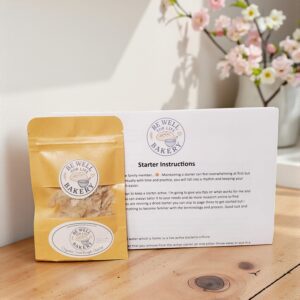
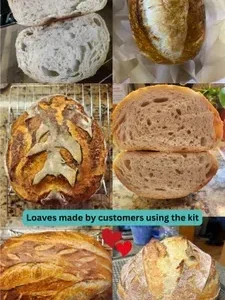
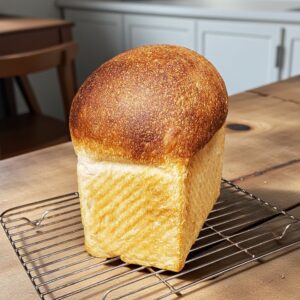
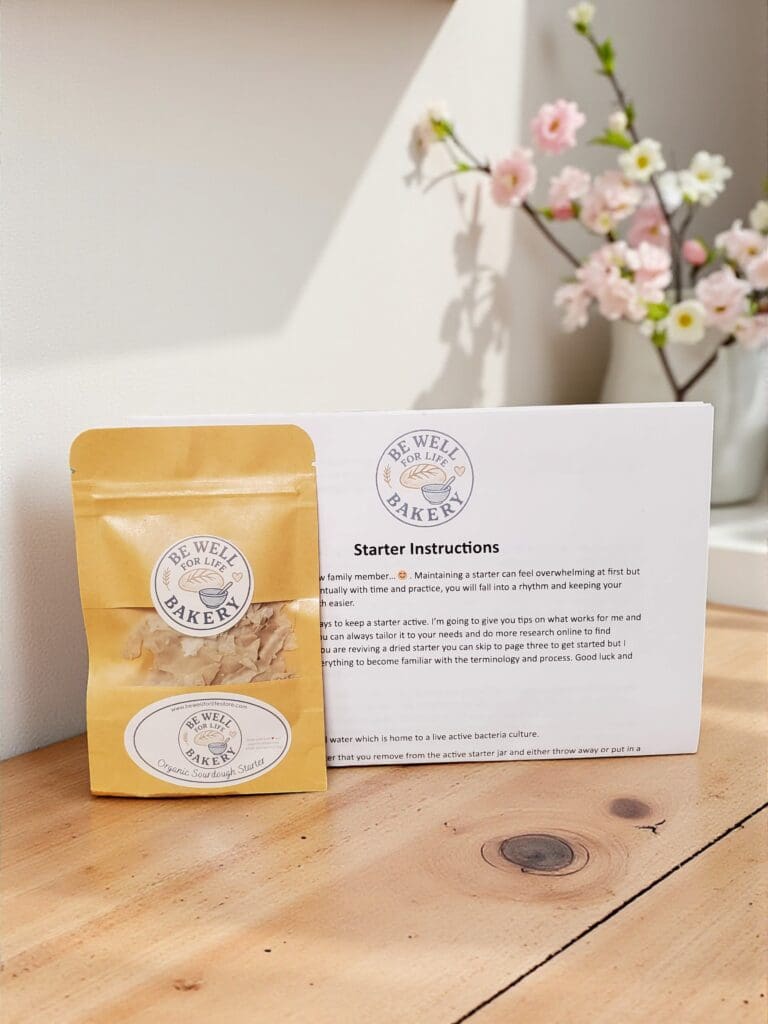
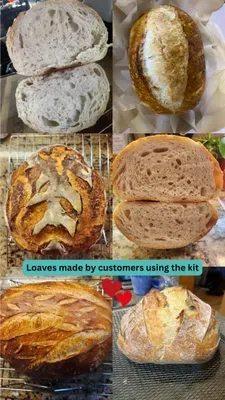
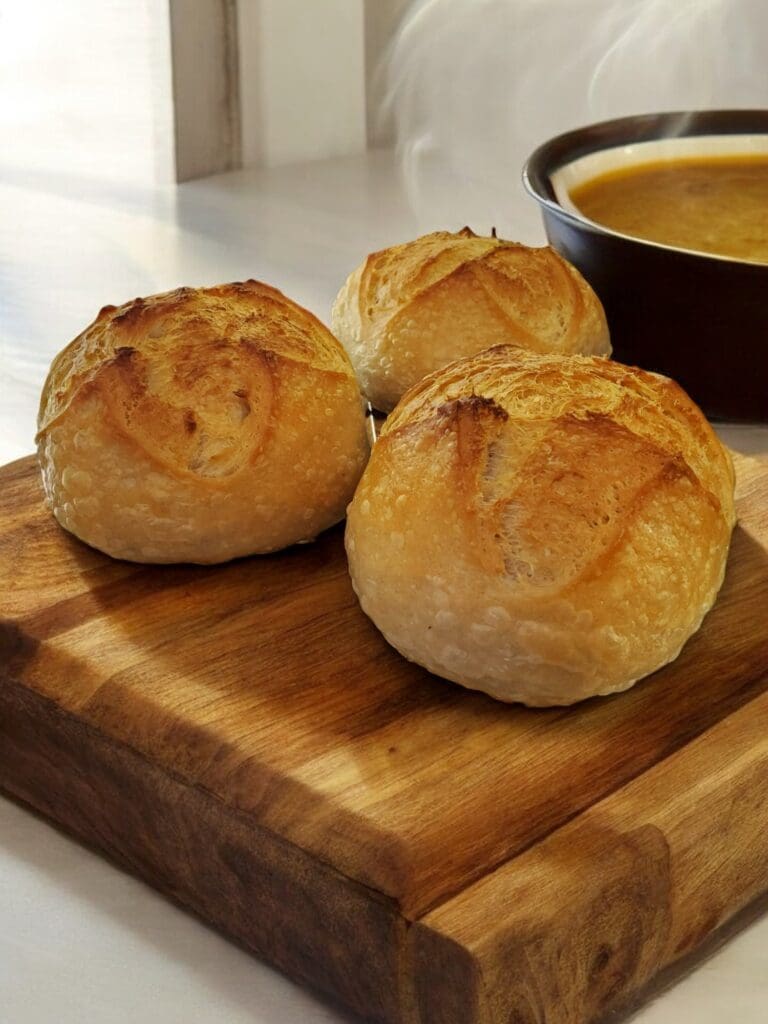
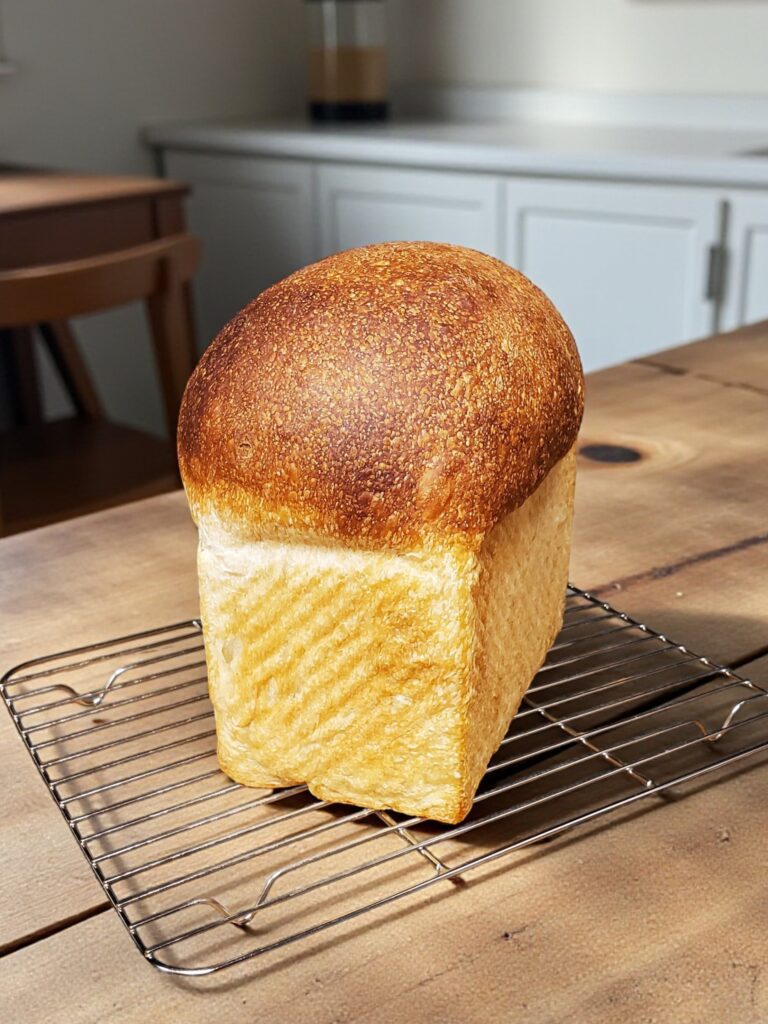
If you’re new to sourdough baking, my organic dehydrated sourdough starter includes beginner-friendly instructions to help you get started with confidence. This is the same dehydrated sourdough starter I use weekly in my kitchen.









Organic Sourdough Starter
$12.00
Ships in a small envelope via USPS
Flat rate shipping: $3.50 U.S. / $7.50 Canada and Puerto Rico
⭐ Beginner friendly
⭐ Ready to bake with in 3-4 days
⭐ The same starter used weekly in my micro-bakery
FAQ Section
How often should you feed a sourdough starter?
If kept at room temperature, feed it at least once every 24 hours.
How do you know when sourdough starter is ready to bake with?
It should double in size, appear bubbly, and smell pleasantly tangy.
Can sourdough starter be stored in the refrigerator?
Yes, refrigeration slows fermentation and allows feedings every 1–2 weeks.
Continue Your Sourdough Journey
👉Simple Farmhouse Sourdough Bread Recipe (Beginner-Friendly + Digestible)
Learn the full beginner-friendly process for mixing, fermenting, shaping, and baking sourdough bread.
👉Beginner Sourdough Mistakes: Why Your Loaf Is Flat, Dense, or Gummy (And How to Fix It)
Common reasons sourdough loaves turn out flat, dense, or gummy — and how to fix them.
👉My Exact Sourdough Baking Schedule (How I Make It Work In My Home Bakery)
See how I manage fermentation, shaping, and baking when making dozens of loaves each week.
38 responses to “How to Care for a Sourdough Starter”
-
Thank you, this is very helpful 🙏😁 now I understand the starters life schedule ☺️😁
-
You’re welcome! I hope your starter is nice and healthy now 😊.
-
-
Thank you. I’m just starting to bake my own sourdough bread. There are so much information out there that I feel overwhelmed and can’t decide who to follow to learn it better. Feels like you definitely know what you’re doing! 🙏🏻♥️
-
You’re welcome! I hope my insights help you bake some delicious bread 😊.
-
-
I just started making my starter I played around with it I’m using unbleached bread flour & unbleached all purpose flour I learned to use less water and using a scale make a difference instead of using cups. So you can use your starter less than 7 days to make your bread I have 2 startws going one with Brad flour the other all purpose and the all purpose rising nicely the. Bread flour taking longer but it has bubbles smells good both flour are unbleached flour but any tips I appreciate it
-
Thank you so much for sharing and for not charging .
I appreciate your generosity and kindness
-
You’re welcome! 😊
-
-
Thank you so much 💐
-
Thank you!!!’ Newbie here!!
-
Thank you for sharing your wealth of knowledge on baking with sourdough!
I learned after my first few loafs not getting the rise I wanted that I needed to be patient with waiting for my started to be strong. There is still room for improvement too get consistency with every loaf but I’m at a point where I’m not baking every day to see if I can get perfection. Thank you -
Lets say I start with 5g20g20g total 45g starter and want to use 100g per loaf. Do I discard 20g then do 25g100g 100g or do a 1:2:2 45g90g90g without discard or does it matter? Thanks.
-
Yes, it would make a difference depending on when you want to use the starter. The 1:4:4 (25:100:100) ratio will rise quite a bit slower. I usually use that ratio overnight when I want to use my starter the next morning. It takes about 12 hours to be ready to go. The 1:2:2 (45:90:90) ratio would most likely be ready in about half that time so about 6-7 hours. So deciding whether to discard or not depends on how soon you want to have the starter ready to go. Hope that helps!
-
-
I was doing really well annd baking sourdough bread quite an bit until I decided to take a break. It seemed like I was wasting so much flour and I literally went through 30 pounds trying to master sourdough in the first few months. anyway I decided to take a break put my sourdough starter in the refrigerator and a month or so later (I know it was a long time) I checked it and it was like dark gray or black. It’s been a few months now and I haven’t used it and I think I’m gonna throw it out because I don’t know if it’s good to use or not. Your recipe seems so much simpler to me so I may try again. I so loved the smell of bread coming out of my kitchen and I keep telling myself it just can’t be this hard anyway just thought I’d comment. Thank you for the recipe and all the advice.
-
Your welcome! If you haven’t thrown it away yet…you starter may still be good. Just scrape off the top and dump any liquid it there is some and take a small scoop of starter from the center. It may take a few feedings to get back on its feet but most likely it will be fine! Glad I could re-inspire you 😊. I hope your bread comes out great!
-
-
Instead of using rye,
Can I use whole wheat to begin making a starter?-
Rye is slightly better than whole wheat for feeding your starter but whole wheat will work 👍.
-
-
If you refrigerate starter, do you change how you feed before you use it?
-
Hi Dawn, I would use my double feed method when taking a starter out of the fridge. It works really well to wake it up and give it a boost before using it. You can find the full details here: The Double Feed Method: My Sourdough Starter Prep Routine . There is a specific section that talks about using your refrigerated starter 😊.
-
-
Hi , thank for all the tips , im surly going to try the double method, whanted to ask what makes the bread test too sour and how can i fix that?
-
Usually the sourness comes from two things, your starter and the length of time you cold proof. When your starter goes a long time without being fed, the wild yeasts run out of food and their activity slows down. But, the bacteria keep working. As the starter sits starved, the ratio shifts heavily toward acetic acid, which drives the total pH down and makes the starter very acidic. If you bake with a starter that has sat in the fridge for a week or has fallen completely flat past its peak, you are introducing a massive amount of sharp acetic acid right into your dough from the very start, giving it that sharp tangy sourness. Cold proofing past 24 hours can also lead to a more sour taste. The double feed method should help your starter be less acidic 👍.
-
-
I am so glad I found you on Instagram. So many great tips I am going to try. I have always used the double feed because I store mine in refrigerator I only bake occasionally for myself. I never get that high a rise. I live in a hot climate and I think I need to let it rise longer before putting it in the basket it’s never doubled! I’m going to try your suggestions this week! Thank you!
-
You’re welcome! I hope it works out great for you!
-
-
What is your recommendation to start feeding a starter with milled flour only..and what kind, hard or soft wheat berries?
-
What is your recommendation to start feeding a starter with milled flour only..and what kind, hard or soft wheat berries?
-
Hi Sarah, I’m definitely not an expert on fresh milled flour. I only started working with it about a month ago. I haven’t tried making any starter with it, so I really cant give advice on this one….Sorry. My instinct tells me hard wheat but I’m not sure if that’s right 😉
-
-
I started this morning! Wish me luck. I’m so happy I found your page on social media.
Saundra
-
Yay!!! 🙌 Best of luck! I’m sure it will work out great. I’d love to see the first loaf you make, email me a picture!
-
-
One question…when I use my starter after the double feeding . What will be my new starter for my next bake day ? I am excited to try the double feeding.
Thanks-
Just make sure to make enough to have some extra left over. Then just save how ever much you normally do and feed it as normal or store in the fridge. I normally feed my starter once a day and then just do the double feed before baking 😉. Hope that helps!
-
-
Thank you for the details on the sourdough starter. I am on my journey with 7 weeks now, going from active to sluggish and now reviving again. Hopefully one day I can bake and certainly will follow the bake recipes once I am through this hurdle.
-
Thank you 😊
-
It’s good to see a great article and simplification of your process. I have been struggling with my starter now for 8 weeks and the latest feed is 1:2:2 ( out of which 25 is organic rye and 75 is AP unbleached King Arthur). I have not come to the point where my fermentation can occur within 12 hrs or 6 hrs for baking. But at the same time I see the feed I do daily after 24 hrs does double, bubbles and dome and lately very lacy.
Not sure how long I have to go and why it’s so slow. I am keeping in the oven as it’s bit cooler in Maryland.
Thank you
-
Loved your info on how you feed your starter..
Question.. is this method for artisan bread? Or do you use this method of feeding your starter for any other sourdough recipe..(loaf bread)
Thanks in advance..-
Thanks! Glad you enjoyed the article. I actually use this method for anything sourdough that I’m making in my bakery…cookies, sandwich bread, English muffins, bagels, etc. This is the main way I prepare my starter when I know I am going to be using it. Hope that helps!
-
-
IM SO HAPPY TO HAVE FOUND YOU I ALMOST QUIT BEFORE REALLY EVEN GIVING IT A CHANCE IM IN 5 LOAFS 3 GOOD 2FLAT DISCOURAGED😞
-
Yay! I hope your next loaf is amazing! 😊
-
-
“When you’re ready to bake again:
Remove the starter from the fridge
Discard and feed it
Let it warm up and become active”Confused by “discard and feed it.”
Is 1/2 discarded and go from there?
Learning so much from you. Thanks.-
Hi! Glad you are enjoying the content! You would want to discard down to a reasonable amount to maintain. That tends to be different for everyone…If you are only baking a little or not too often, I would discard until you have about 30g left and then feed that 60g flour and 60g water. That should be enough food for a week or two in the fridge.
-


Tags: Education

Leave a Comment