
Sub-Total: $0.00
How to Get a Better Rise with Sourdough (My Proven Tips)
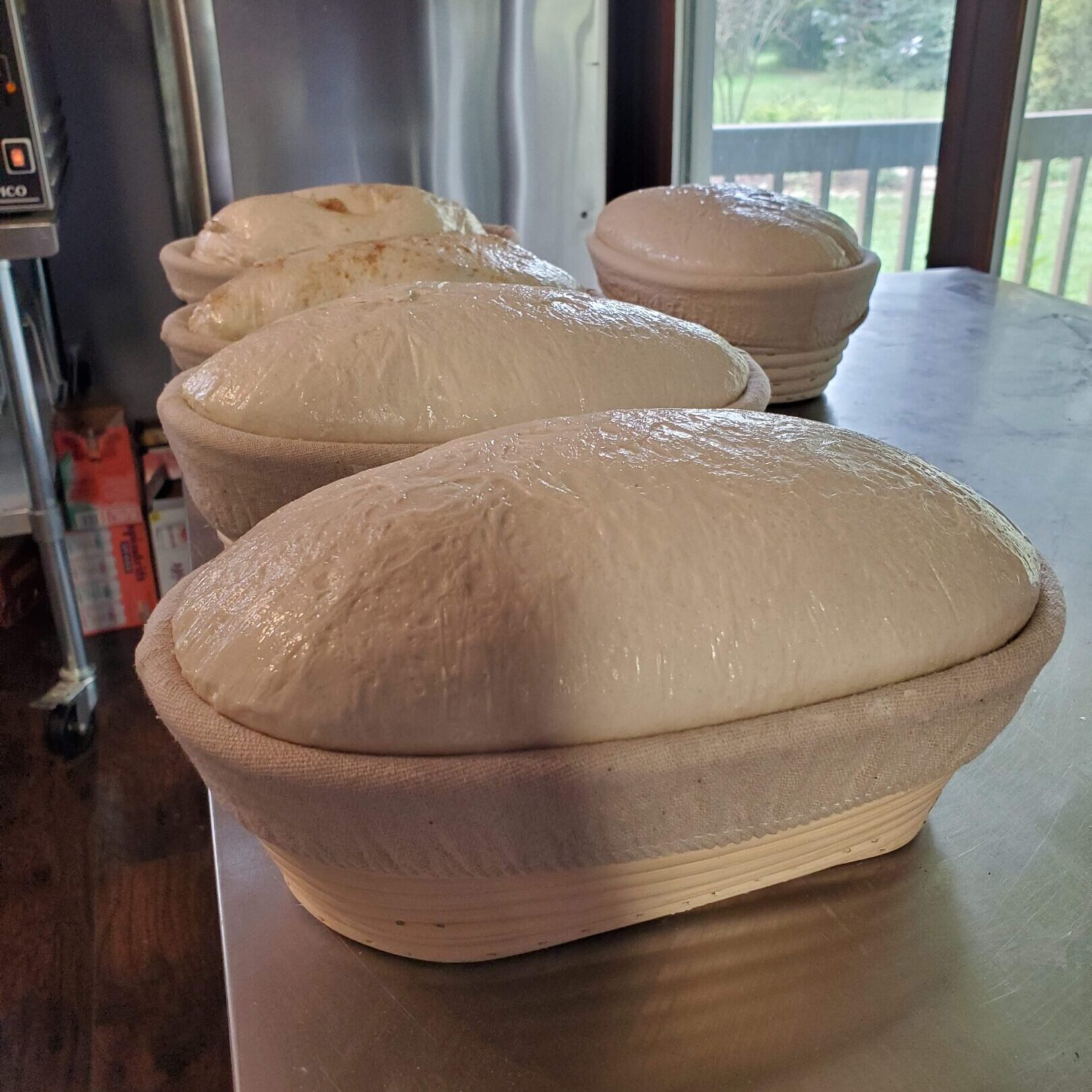
If your sourdough isn’t rising the way you want it to, you’re not alone.
There’s a lot of information out there about sourdough — and honestly, a lot of it can feel overwhelming and confusing when you’re just starting out, or even if you’ve been doing this awhile.
After baking thousands of loaves in my home micro-bakery, I’ve learned that a few key things make the biggest difference.
These are the tips that have had the biggest impact on my bread — and the ones I wish I understood from the beginning.
If you’re trying to get a better rise with sourdough, a few small changes can make a huge difference.
1. How to Feed Your Starter (And Why It Matters So Much)
One of the most important parts of sourdough baking is maintaining a strong, healthy starter.
If your starter isn’t active and balanced, everything else becomes harder.
How Often Should You Feed Your Starter?
If you’re baking regularly (especially multiple times per week), your starter should be:
👉 fed daily
👉 kept at room temperature
This keeps it active, predictable, and ready to use.
My Feeding Ratio
I like to keep things simple and consistent.
If I’m not actively baking and just maintaining my starter, I typically feed it at:
👉 1:4:4 ratio (starter : water : flour)
If my starter looks thin or smells overly fruity the next day, I’ll increase that to:
👉 1:5:5
The goal is to give your starter enough food to stay active between feedings without starving.
It doesn’t have to be perfect, but several days in a row of underfeeding can cause your starter to become weaker and overly acidic.
What I Feed My Starter
I always feed my starter using:
- starter
- flour (a mix of rye and bread flour)
- water
Keeping this consistent makes your starter much more predictable.
Why I Add Rye Flour
One thing that has made a noticeable difference in my starter:
👉 I always use 1/3 rye flour when feeding
Rye flour is very active and helps boost fermentation. It has a higher enzyme activity, which speeds up fermentation and attracts more yeast. It gives your starter more strength and consistency, which carries over into your dough. Additionally, it provides a unique flavor profile and retains moisture better than other flours, resulting in a more complex and flavorful bread.
This is a small change, but it can make a big difference in how your bread performs.
Here’s the exact rye flour I use.
Should You Keep Your Starter in the Fridge?
This is something I don’t see talked about enough.
For convenience, many people store their starter in the refrigerator — and that works fine for casual baking.
But if you are:
👉 baking regularly
👉 or thinking about starting a micro-bakery
I highly recommend:
👉 keeping your starter on the counter and feeding it consistently
Refrigeration slows everything down and can change the balance of yeast and bacteria over time. When the yeast activity slows down, the lactic acid bacteria continue to produce acids, leading to a more acidic environment. This can affect the flavor and performance of the starter in baking. Keeping your starter at room temperature allows it to stay more stable and predictable.
That consistency is extremely important when you’re baking often.
That said, I understand this isn’t practical for everyone — but if you’re serious about sourdough, minimizing fridge time can make a noticeable difference.
Using Your Starter at the Proper Time
A starter that hasn’t had enough time to fully develop will still rise — but it won’t perform nearly as well.
This is one of the most common things I see rushed or overlooked.
When you use your starter is just as important as how you feed it.
Using a starter before it peaks means the yeast hasn’t fully developed, which results in less strength, weaker fermentation, and a lower rise.
I almost always err on the side of using my starter slightly after peak rather than at or before it.
What to Look For
A well-fed, slightly “hungry” starter:
✔ rises better
✔ ferments more efficiently
✔ produces better texture in your bread
Simple Tip
If you’re unsure when to use your starter:
👉 wait until it has peaked and just started to fall slightly
A slightly “hungry” starter will consistently perform better than one that hasn’t fully matured.
Learning how to feed and time your sourdough starter properly is one of the biggest factors in getting a strong rise.
If you’re struggling with your starter and want a fresh, reliable option, you can start with the same dehydrated starter I use in my own kitchen:
It allows you to skip the early building phase and get right to baking with a strong, active culture.
It’s a great option if you want consistent results without the trial and error.
2. My Double Feeding Method (For a Stronger Starter)
If there’s one thing that has improved my results the most, it’s this:
👉 double feeding my starter before baking
Instead of feeding once and using it, I feed it twice (the same day) with no discard, before mixing.
This allows the yeast to fully multiply and strengthens the starter significantly.
Around 10 or 11 AM, I give my starter its first feeding of the day.
(Feeding it twice within 24 hours is my little secret to keeping it extremely active and healthy.)
Before that first feeding, I calculate how much total starter I’ll need for all of the dough the next morning and how many containers I’m using. My favorite container for mixing starter holds 2,250 grams so that’s what I normally start with to calculate. For this example, let’s say I need 2,250 grams of starter.
First Feeding — 10 or 11 AM
To prepare for that larger build, I start small and intentional.
I mix:
- 83 grams starter
- 83 grams water
- 83 grams flour
This gives me approximately 250 grams of starter total.
I use a 1:1:1 feeding ratio here so the starter peaks within several hours and is ready for its final feeding around 6-8 PM, depending when I’m mixing the next day. I like to do my final feeding 12 hours before I plan to mix the next day.
The key here is that I do not discard after this first feeding. The total amount after this build (250g) is intentional — it’s exactly one-quarter of the flour I’ll add at night.
Second Feeding — between 6-8 PM (The Final Build)
Around 8 PM, I take that full 250 grams — without discarding — and feed it:
- 1,000 grams water
- 1,000 grams flour
That brings the total starter to approximately 2,250 grams, which is exactly what that container holds and what I need for mixing dough the next morning. I normally have multiple containers this size with either this amount or slightly less depending
For this final build, I’m essentially using a 1:4:4 ratio (1 part starter, 4 parts flour, 4 parts water). This higher feeding gives the starter enough fuel to rise steadily overnight without over-peaking.
If your kitchen runs warm, you may need to increase that ratio slightly (1:5:5, for example) to prevent it from peaking too early.
If you looking for a good container to make large amount of starter, this one is my favorite. It holds 2,250 grams perfectly and I don’t have to worry about it overflowing.
Why This Two-Step Feeding Works
Feeding twice within 24 hours strengthens the yeast population and balances the bacteria. It creates a vigorous, active sourdough starter that has the fermentation power needed for multiple loaves.
When you’re baking 10, 20, or even 60+ loaves a week, you quickly learn:
Fermentation strength matters far more than fancy techniques.
📌 Starter Feeding Ratio Chart (1:4:4 Example)
| Total Starter Needed | Starter (1 part) | Flour (4 parts) | Water (4 parts) |
|---|---|---|---|
| 900 g | 100 g | 400 g | 400 g |
| 1,350 g | 150 g | 600 g | 600 g |
| 1,800 g | 200 g | 800 g | 800 g |
| 2,250 g | 250 g | 1,000 g | 1,000 g |
| 2,700 g | 300 g | 1,200 g | 1,200 g |
🥖 Starter Build Calculator Tip
Here’s the simple way I calculate my overnight build:
- Decide how much total starter you need.
- Divide that number by 9.
(Because 1:4:4 = 9 total parts.) - That number is your “starter” amount.
- Multiply that number by 4 for flour and 4 for water.
Example:
Need 2,250 grams total starter?
2,250 ÷ 9 = 250 grams starter (this will be the total finished amount after the 11am 1:1:1 feeding)
250 × 4 = 1,000 grams flour
250 × 4 = 1,000 grams water
Done.
No guessing. No waste. No discard. Just strong active starter 😊.
Want to learn more about the method? Check out my article:
👉 The Double Feed Method: My Sourdough Starter Prep Routine
Want to make the math easier?
The method itself is simple — but figuring out exactly how much starter to begin with can get a little tricky when you change the amount of starter you need.
That’s why I made my Double-Feed Sourdough Starter Calculator. It calculates both feedings for you, adjusts for the amount of starter you want to keep, and even helps you figure out when to feed based on when you want to mix your dough.
👉 Get the Double-Feed Sourdough Starter Calculator →
• Instant digital download •
3. My Dough Formula (Why I Use Less Starter)
Another thing that plays a big role in how my bread rises is the amount of starter I use in my dough and the quality of flour I use.
Most traditional sourdough recipes use around:
👉 100g of starter
But in my kitchen, I use:
👉 50g of starter per loaf
Why I Use Less Starter
Using less starter slows fermentation slightly and gives the dough more time to develop strength.
This helps:
✔ improve structure
✔ build stronger gluten
✔ create a better overall rise
It also gives you more control over fermentation, especially when you’re baking consistently.
What This Means for Your Dough
When you use less starter:
- fermentation takes a little longer
- the dough develops more gradually
- the final loaf has better structure and lift
This is a small adjustment, but it makes a noticeable difference in the final result.
Flour Matters Too
I always recommend using a strong bread flour.
Bread flour has a higher protein content than all-purpose flour and makes a big difference in structure and rise. My personal favorite is King Arthur Baker’s Classic Organic. I buy it in bulk 50lb bags, but I’ll include a link below for a smaller version.
My Full Recipe
If you want to see exactly how I mix, ferment, and shape my dough, you can find my full process here:
👉 Simple Farmhouse Sourdough Bread Recipe (Beginner-Friendly + Digestible)
4. My Cold Proofing Setup (And Why It Matters)
Cold proofing is one of the most important parts of my process — and often overlooked. To get the full benefits of long fermentation with sourdough, I feel that a cold proof is necessary.
My Refrigerator Setup
I use a dedicated bread refrigerator set to about:
👉 42°F
This is slightly warmer than a standard fridge.
Because of that:
👉 the dough doesn’t cool as quickly
👉 fermentation continues longer
👉 I get better rise during cold proof
This is a huge part of my process and contributes significantly to my final loaf.
If You Don’t Have a Warmer Fridge
Most people don’t — and that’s completely fine.
Here’s what I recommend instead:
👉 leave your dough out longer in the banneton after shaping before refrigerating
After shaping, even with this fridge setup I let my dough sit in the banneton for:
- 1 to 1.5 hours in winter
- 45min to 1 hour in summer
This gives the dough more time to develop before the cold slows everything down.
👉This is a big part of why my loaves stay so puffy and don’t deflate.
My Timing (Example)
In winter, my typical schedule looks like:
- Bulk fermentation (7 hrs)
- Shape dough
- Rest in banneton: 1–1.5 hours
- Refrigerate
- Cold proof: 16–24 hours
Do I Let Dough Come to Room Temp Before Baking?
👉 No — I bake straight from the fridge
This helps maintain structure and gives better oven spring.
5. The Equipment I Use (And When It Matters)
I bake using a steam-injected bread oven, which makes a noticeable difference in the final result.
The oven I use is:
It’s designed specifically for micro-bakeries and allows for consistent steam and heat.
I’ve been using it for about three years and recently added a second one to my bakery setup — it’s been one of the best investments I’ve made for consistency and scaling production.
Do You Need a Bread Oven?
No — most home bakers absolutely do not need a bread oven to make great sourdough.
Before I upgraded, I baked all of my loaves in a Dutch oven, and it worked beautifully. In fact, if you’re baking at home, a good Dutch oven is one of the best tools you can have because it traps steam and helps create that beautiful oven spring and crust.
This is the Dutch oven I used and still recommend:
👉 Crock-Pot Artisan 7-Quart Oval
Tips for Creating More Steam in a Dutch Oven
Steam is one of the biggest factors in getting good rise during baking. It keeps the crust soft in those first critical minutes so your loaf can fully expand.
Here are a couple of simple tricks I used:
1. Add ice cubes under the parchment paper
After placing your loaf into the Dutch oven on parchment paper, drop 2 ice cubes — one on each side underneath the parchment. As they melt, they create extra steam inside the pot.
2. Spray your dough before baking
Lightly mist your loaf with water right before putting the lid on. This adds even more moisture and can help create those beautiful little blisters and bubbles on the crust.
I still spray my loaves before they go into my bread oven because I love the crust it creates.
A bread oven is an amazing upgrade if you’re running a micro-bakery or baking at scale, but you absolutely do not need one to make incredible sourdough at home.
But if you’re:
👉 considering starting a micro-bakery
👉 or scaling up production
having the right equipment can make your process more consistent, efficient, and easier to grow.
Final Thoughts
Sourdough doesn’t have to be complicated — but it does require consistency.
If you focus on:
✔ maintaining a strong starter
✔ feeding it properly
✔ allowing enough fermentation time
you’ll see a huge difference in your bread.
These are the small things that, over time, make the biggest impact.
Continue Your Sourdough Journey
👉Beginner Sourdough Mistakes: Why Your Loaf Is Flat, Dense, or Gummy (And How to Fix It)
Common reasons sourdough loaves turn out flat, dense, or gummy — and how to fix them.
👉My Exact Sourdough Baking Schedule (How I Make It Work In My Home Bakery)
See how I manage fermentation, shaping, and baking when making dozens of loaves each week.
👉How to Care for a Sourdough Starter
Feeding, Maintaining, and Preparing It for Baking
Frequently Asked Questions
Why is my sourdough not rising well?
The most common reasons are a weak starter, improper timing, or not enough fermentation.
Should I use my starter at peak or after?
For best results, use your starter just after it peaks and begins to fall slightly.
Does cold proofing affect sourdough rise?
Yes, a properly managed cold proof allows continued fermentation and improves rise and structure.
How often should I feed my sourdough starter?
If baking regularly, feed your starter daily and keep it at room temperature.
If you found these tips helpful, I’d love to hear your feedback below ⭐⭐⭐⭐⭐— it helps others and supports my small bakery.
On sale products
-
Cropped Tea-Shirt *Closeout Sale*
Original price was: $19.99.$5.00Current price is: $5.00. -
Happy Thoughts and Sourdough T-Shirt *Closeout Sale*
Original price was: $19.99.$5.00Current price is: $5.00. -
Raw Hem Cropped Tea-Shirt *Closeout Sale*
Original price was: $19.99.$5.00Current price is: $5.00. -
Tea-Shirt *Closeout Sale*
Original price was: $19.99.$5.00Current price is: $5.00. -
Women’s Fit Tea-Shirt *Closeout Sale*
Original price was: $19.99.$5.00Current price is: $5.00.





43 responses to “How to Get a Better Rise with Sourdough (My Proven Tips)”
-
I love your tips. I’m only baking two loaves a week ( just my husband and I) and keep a small amount of starter in the fridge. What is the best way to make sure my starter is very active before using it? Do I feed it twice a week? And what ratio? Thank you.
-
Hi Donna. I’m glad you are enjoying my tips! You could definitely try my double feeding method without discarding between, but keep in mind you want to start with a very small amount since you only bake a few loaves. So what that would look like is, take your starter out of the fridge about an hour or two before feeding. Remove 10 grams of starter. Feed that 10 gams a 1:1:1 ratio around 10 or 11am. (10:10:10) this will leave you with 30g of starter by evening. For the starter that you removed from the fridge, I would just discard what you usually do and refeed and just put back in the fridge, if you are leaving it for a week or two at a time a 1:2:2 feeding should be good. Now the 30 grams that you built will need to be fed again at night. Take the whole amount (30g) and feed it a 1:4:4: ratio. (30:120:120). You should have a very active ready to go starter by morning. The 1:4:4 feed usually take about 12-13 hours to peak. Let me know if this helps and makes sense 😊.
-
Hello
My bread most of the time when it come out of the chiller and I put in the oven to bake, flatten then rise. What can be the problem
Also I use a rational Icombi pro to bake it.
Thank
-
-
-
Roberto Barallobre
-
In case of regular baking…but only one day per week, should I’ll keep my levain in the counter at room temperature or it’ll better keep It in frige?
-
For only once a week baking I think storing it in the fridge makes more sense. If I were using it this way, at least once a month I would probably keep it out for a few days at a time and feed it 1-2 times per day just to keep the acidity in check, then move it back to the fridge. Hope that helps!
-
-
I do a small amount of baking. Mainly sandwich loaves. I live in the Caribbean. My room temperature is 84F. It is a struggle. Any recommendations for warmer conditions. I do have a sourdough home do i keep my starter seed around 75F. Thanks for sharing your information.
-
Hi! Ooooh that’s a tough temperature to work with. My dough was thrown off this week because is was about 78 degrees….lol. Which is cool compared to what you’re working with. I think using a recipe like mine with less starter could be very helpful because it will slow down the fermentation a bit. Also, when you mix you could use cold water, unless you already do that. The cool start should help slow the fermentation to allow for better development. Besides that, I’m not sure. Your bulk times are probably much shorter already. If you have the ability to set up a fridge with a warmer temp like mine (around 40 degrees), you could move it to the fridge after shaping a little sooner than you do now and the fermentation could continue slowly in there. Just a few ideas hope they help 😊.
-
Hi there! I wanted to do your starter with the 1/3 rye flour. When I do bake do I do 1/3 rye flour also or all bread flour when getting dough ready to bake??
-
Hi! When I am mixing dough to bake, I just use all bread flour. The rye is only for feeding the starter 😊. Good luck with your bake!
-
-
-
What temp is your dough during bulk fermentation? At 75° my dough is taking 7-8 hours to bulk ferment then I still find it is under proofed. I am going to leave it on the counter longer than 1 hour like I’ve been doing after shaping. My fridge is 38°.
-
Hi! 75 degrees would be on the lower end of the temp that I like my dough to be when fermenting. Honestly, my ideal temp is about 77 degrees, it doesn’t always work that way…lol but that’s what I shoot for. On a typical day it ranges from 75-80. I usually only temp my dough near the end of bulk fermentation, probably about 6 hours in, to see how long I will leave it resting before moving to the fridge. If it was at 75 degrees I would probably do about 8.75 or 9 hours at room temp. Then move to the fridge. I still always shape at 7 hours. I just let it sit in the banneton after shaping. If I were you, I would try resting a little longer before moving to the fridge.
-
-
Hi, thanks for your suggestions. I bulk to around 35-40% and that seems to help somewhat. I will see if I can adjust my fridge temperature. Appreciate your comments.
-
Such great information! Thank you for sharing your knowledge.
-
You’re welcome! I am happy to share and glad you are finding it useful 😊.
-
-
I will be gone for 1-2 weeks. Should I measure in grams my discard I have in fridge then do a large feed once to keep it fed? Thanks
-
1-2 weeks in the fridge should be no problem. I would feed a 1:2:2 or 1:3:3 ratio and it will be fine while you are gone. Measuring in grams is always more accurate but you could eyeball it too if that’s what you are used to.
-
-
This is a lot of info! 50grams of starter? Im going to try your recipe. You dont even use honey! That saves money!
Thank you!-
Yes, no sweetener in my traditional loaves 🙂 I like the slow fermentation that occurs with less starter. I feel like it really develops the flavor and strength in the dough better. I’d love to hear how it turns out for you! Happy Baking!
-
-
Excited to try your feeding method. I have been baking sourdough for a couple of years and have a very small micro-bakery business. I live in Georgia so we have issues with temp, but also humidity. My loaves have all been over-fermenting this week, and I need to start baking on Friday, so I will incorporate your techniques into my routine. One question – even when you are doing the big feed you use rye flour also? I use rye occasionally when my starter, Alice, wants to throw a party, but not on a regular basis.
Thank you for giving us these great tips.-
Hi! That’s awesome, I hope it works out for you. I can imagine the weather is challenging there…the heat is always the worst. I can deal with the cold but heat throws everything off for me…lol. To answer your question about the rye, yes. I always feed 1/3 rye even when I’m doing a big feed prepping for a dough day. Glad you found the tips helpful 😊. I hope your bake goes well this week!
-
-
Hi, Tq for sharing ur step by step technique. I am a weekend baker n keeps my starter in the refrigerator.
As advised removed day bef trying to bake n fed 1:5:5 n nxt day day of baking 1: 2:2
Is that good enough?
I live in the tropical country where temp can get vv high 91 to 92 F .
Sometimes my loaf is fine and sometimes it’s not. -
That is very helpful, thank you so much for those tips…
-
You’re welcome! 😊
-
-
Thank you for sharing your knowledge!
I’ve been making sourdough bread occasionally for several months, but I could never achieve that beautiful “ear.”
I followed your advice about double-feeding the starter, and it made a huge difference! I also realized I had been slightly under-proofing my dough.
After following your recipe, my bread came out absolutely delicious and looked magazine-worthy.
Thank you again for your generosity in sharing your expertise!
-
You’re welcome! I’m so happy for you!!! Thank you for sharing your feedback and your wonderful bread, it sounds fantastic. I wish there was a spot that you could attach a picture 😍. Happy Baking!
-
-
I just threw my lump of bread dough in the trash…again. Really dense and tiny rise. After reading your tips Im praying this will work. I guessing Im using my starter too soon… not fully proofed. Thank you for taking the time to share.🌺🌺🌺
-
Oh no, I’m sorry ☹️. I hope some of my tips are helpful. If you still need to troubleshoot after your next loaf please feel free to send me an email info@bewellforlifestore.com and I can help try to figure it out. Best of luck to you on this next one! 🤞
-
-
Hi from the UK, thanks for sharing this. It given me some great insight and direction. quick question, I have been feeding Stiff starter for a while now on 1:2:3 ratio and it gets an awesome rise. Which stay risen for sometime before slightly deflating. When is the best time to use it and do you use it in the same way as a wet starter.
-
You’re welcome. Yes, I would say you could use the stiff starter in the same way you use the wet starter. It doesn’t look like your formula is quite as stiff as a traditional stiff starer which is usually 50 or 60% hydration. If I’m reading yours correctly you’re at about 66%. This should perform similar to a 100% hydration starter, but it may make your loaves a little bit more mild flavor wise. The stiff starter ratio favors yeast over bacteria so it changes the fermentation a bit. Here’s a great article I found about it giving a pretty detailed explanation. https://www.the-bread-code.io/recipe/2021/10/24/all-you-need-to-know-stiff-liquid-regular-starter.html Hope this helps!
-
-
אני רוצה לומר לך תודה על המאמר וההדגשים באפיית לחמי מחמצת , אני בהחלט אנסה את השיטה שלך . תודה רבה
-
You are very welcome 😊. Happy Baking!
-
-
Hello, thank you for all the information you shared. I live in a city where the daily temperature reaches about 90 F during the summer. I bake bread only once a week. I keep my starter in the refrigerator, take it out of the fridge in the afternoon a day before baking and feed it in a 1:1:1 ratio. I feed the starter once more that night, using a 1:3:3 ratio and the next morning (about 8–9 hours later), I knead the dough.
As I understand it, you keep your starter on the counter and never put it in the fridge. I have two questions for you regarding this:
1. When you’re not making bread, at what ratios do you feed and let your starter sit on the counter? What I mean is, when I feed my starter at a 1:1:1 ratio, for example, at the temperature in my city, it reaches its peak in 4–5 hours and then starts to collapse. Should I let it sit on the counter in its collapsed state (and if so, when should I feed it again), or should I feed it repeatedly as soon as those 4–5 hours pass?
2. As I mentioned above, I do two feedings right before making bread because my starter comes out of the fridge. So, even though you keep your starter on the counter, do you still do two feedings in a row?
-
Hi! That’s pretty warm to leave starter out but it may be possible with a big feeding. My house stays somewhere around 70-72 degrees usually so I feed my starter about a 1:5:5 at night. It does fall completely by mid afternoon and get pretty hungry by the evening but it seems to do just fine with one feeding when I’m not ramping up for baking. You may have to try an even higher ratio with the heat though, maybe 1:6:6 or 1:7:7. Yes, I still do two feedings before baking because I like how strong it makes it and I know its ready to go then 👍. Hope that helps answer your questions.
-
-
I read all the great info that you wrote thank you do much ! I’m back on sourdough bread after 5 years and the temperature and humidity and even altitude is different now so im starting over but loving it! My bread came out very tasty and pretty decent looking but my biggest struggle now is that my dough really looks good and rise beautifully but after the cool rise when I take the dough out of the banneton they spread out not all the way but yes loose they form! Even that the crumb is pretty good and they aren’t dense is just I want them be higher and beautiful rounded!! What I’m doing wrong?? Thank you
-
It’s hard to tell exactly what your main issue is or combination of factors without knowing a little more details about your recipe. But most likely, the cause sounds like it could be over proofing since it’s spreading out, but it’s not heavy like a brick. It’s probably just past its peak fermentation. In high humidity or warmer temper temperatures, the dough can ferment much faster. And that causes a weaker gluten structure which flattens out after coming out of the basket. It could also be your flour. If you’re using a lower protein content flour, it might not have enough strength to hold its shape. The altitude adjustment could be a factor as well… Higher altitude causes the dough to rise faster and aggressively, which could also weaken the gluten network. And lastly, it could have a little bit to do with shaping, just not getting enough surface tension before putting it into the banneton. So, some fixes you could implement: Try shortening your bulk fermentation just a little bit at a time to see if you can find the sweet spot. Then I would maybe try finding a higher protein bread flour if you can. And to deal with your higher humidity, you could try just taking a little bit of water out of your recipe, maybe 3 to 5%. Depending on how humid it is, because your dough will be absorbing some of that water from the air which could make it a little bit looser. And lasty, make sure you are adding some tension at shaping to form a nice loaf. Hopefully these tips help! 🤞
-
-
Thank you so much for the Great information. I bake big beautiful ,light loves of bread however they are still slightly wet inside. This does not affect the taste, but I just can not figure out how to fix this problem. I will be baking again in t he next day or two and am going to try using less starter. Hope this helps. My starter is very strong,I do not think that the strength is the issue,but? Thank you for EVERYTHING!
-
You’re welcome! How long do you wait to cut your bread after baking? Sometimes cutting too soon can disrupt the cooling process and cause it to be more wet inside. I would wait at least 4 hours. I actually prefer to cut into mine the next day but I understand that’s not always feasible. Hopefully you can figure it out 🤞
-
-
I am wondering how you get such a rise from your recipe. Do you do a double recipe for your loaf?
-
Hi! Nope, my loaves are just one recipe, 900g of dough each. I use all the tips in this article to get the best rise 😉.
-
-
Thank you for your time. I wait until the next morning to slice my bread.
-
These are great tips, thank you.
Question:
My starter is strong, I use just after peak. The bulk fermentation seems to be good. I put in banneton or bowl. When I bake, I don’t get the rise. My Dutch oven is larger than the loaf. That might be way but many people open bake and the bread has great rise. Any suggestions please? -
Hi, im going to try your double feeding method next week, but we prefer a lighter tasting loaf and I think I understand that a long cold prove will mean the sourness increases. Am I correct with this understanding, and is there a tweek to your method/timings i can make? Thanks
Jacqueline


Tags: Education

Leave a Comment