
Sub-Total: $0.00
Easy Sourdough Pizza Dough (Freezer-Friendly Recipe)

There’s something so satisfying about pulling homemade pizza dough out of the freezer and having dinner halfway done before you even start cooking.
This sourdough pizza dough has become one of my favorite ways to make homemade pizza feel realistic on busy days. I’ll often make a triple batch, freeze individual dough balls, and then thaw them whenever we want pizza night without all the last-minute prep.
The dough is soft, easy to work with, and creates a crust that’s chewy, flavorful, and crisp around the edges. And unlike some sourdough recipes that feel overly complicated, this one fits easily into a normal day at home.
If you’re newer to sourdough, don’t overthink the process. The dough doesn’t need perfect shaping or fancy techniques to turn out delicious.
Why You’ll Love This Recipe
- Freezer-friendly for quick meals
- Beginner-friendly sourdough recipe
- No commercial yeast needed
- Soft and chewy crust with great flavor
- Perfect for weekly meal prep
- Can be refrigerated for several days before baking or frozen for months
Ingredient Notes
Active Sourdough Starter
A bubbly, active starter helps create better rise, texture, and flavor in the dough. If your starter is weak or sluggish, your dough may take longer to ferment.
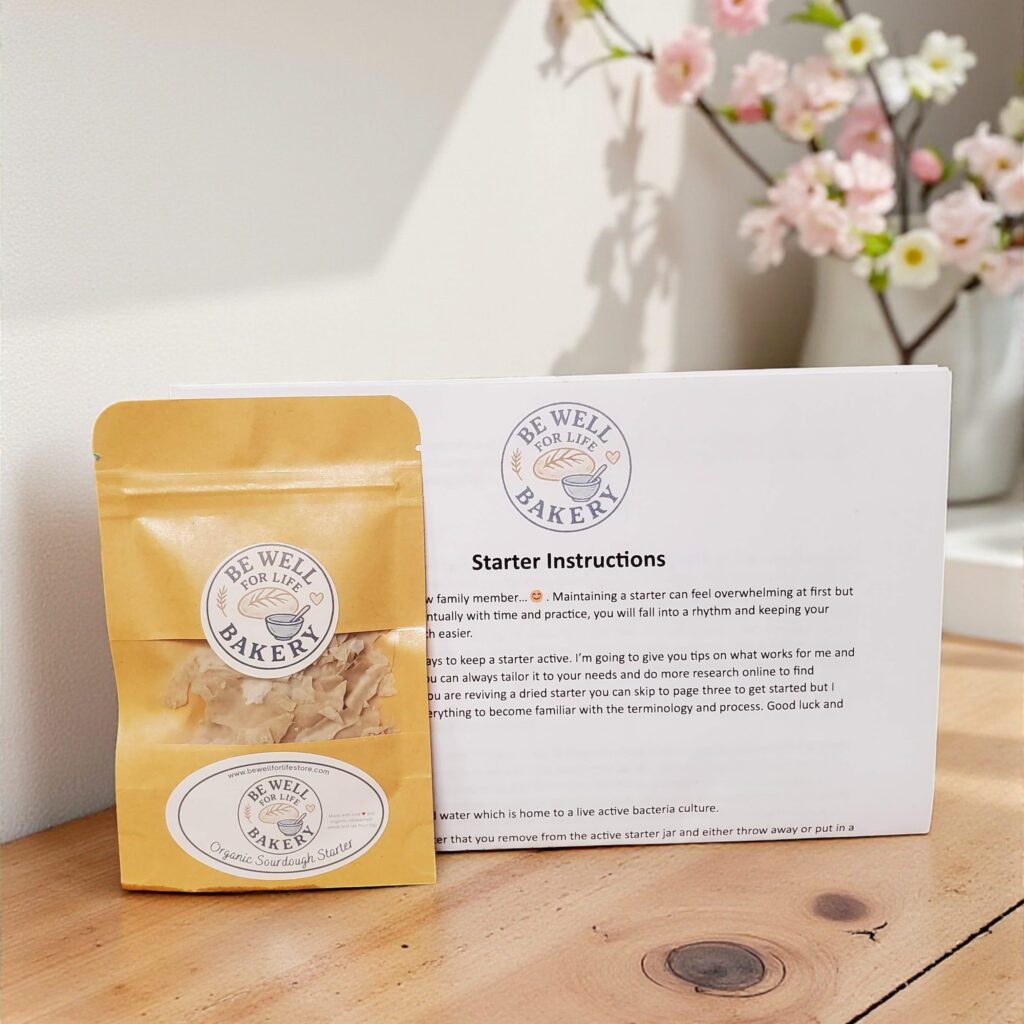
If you’re newer to sourdough or struggling to get a strong active starter going, I also offer my organic dehydrated sourdough starter with beginner-friendly instructions to help simplify the process and get you baking faster.
Olive Oil
Olive oil helps create a softer dough that is easier to stretch and shape.
Sugar
A small amount of sugar helps encourage fermentation, creates beautiful browning during baking, and gives the crust a softer texture.
I’ve tested sourdough pizza recipes without sugar before, and many of them turned out overly tough or chewy once baked. This dough stays much softer and more enjoyable to eat without tasting sweet.
Don’t worry — the sugar does not make the dough overly sweet. Most of it gets used during the fermentation process.
Flour
Bread flour works great for a chewy pizza crust, but all-purpose flour can also be used if needed.
How To Make Sourdough Pizza Dough
Step 1: Mix the Dough
In a large bowl, mix together the sourdough starter, sugar, water, olive oil, flour, and salt until a shaggy dough forms. The dough may look rough at first, which is completely normal.
Cover and let the dough rest for 30 minutes before beginning stretch and folds.
Step 2: Perform Stretch and Folds
Perform your first set of stretch and folds by gently pulling one side of the dough upward and folding it over itself. Rotate the bowl and repeat until all sides have been folded.
Cover and let rest for 30 minutes.
Repeat this process two more times, resting 30 minutes between each set.
By the final stretch and fold, the dough should feel smoother and stronger than when you first mixed it.
Step 3: Bulk Fermentation
Cover the dough and allow it to bulk ferment for a total of 7–8 hours from the time the dough was first mixed, including the stretch and fold periods.
The dough should look puffy, airy, and doubled (or more) in size when fermentation is complete.
If your house is warmer, around 7 hours will likely be enough. In a cooler house, closer to 8 hours may work better.
For reference, I typically bulk ferment this dough for about 7 hours with my house around 68–70°F.
Step 4: Divide and Shape
Divide the dough into three 340g dough balls and lightly drizzle with olive oil.
At this point you can either refrigerate the dough for later use or freeze it for future pizza nights.
If you want to watch the video on Instagram, here’s the link:
Refrigerating or Freezing the Dough
Refrigerator Option
Store dough in and airtight bag or container in the refrigerator for up to 3 days before baking. The dough will continue fermenting slowly and develop a more sour flavor over time.
Freezer Option
Place the dough into freezer-safe bags or containers and freeze for up to 6 months.
I personally love freezing individual dough balls because it makes homemade pizza so much easier on busy days. I also vacuum seal my pizza dough so it stays fresh and holds up really well in the freezer for long-term storage.
*Note: If using a vacuum sealer I recommend using the manual function and sucking out just enough air so that it seals around the dough. Then you can manually tap the seal button. If you use the auto vacuum/seal settings, it will most likely completely flatten it to a pancake, lol.
I’ve put together a list of all the equipment I use for vacuum sealing my pizza dough, including the vacuum sealer and bags I personally use.
You can find my full Amazon pizza dough supply list here:
How To Use Refrigerated Dough
Remove the dough from the refrigerator and place it in a warm area for at least 5 hours before baking.
The dough should look slightly puffy and relaxed before shaping. If the dough feels tight and difficult to stretch, it likely needs more time to warm up and ferment.
How To Use Frozen Dough
Remove frozen dough from the freezer and place it in a lightly oiled covered bowl in the refrigerator overnight to thaw.
Once thawed, follow the same instructions as refrigerated dough by allowing it to rest at room temperature for several hours before baking.
Can I Make This The Same Day?
Yes. After bulk fermentation, divide and shape the dough into dough balls. If you prefer to bake the same day instead of refrigerating, allow the dough to rest at room temperature for about 3 additional hours, or until slightly puffy and relaxed before shaping your pizza.
The dough still needs a second rise after bulk fermentation, so it usually won’t be quite ready to use immediately after shaping.
Baking Instructions
Preheat your oven with a pizza stone or baking pan to 475°F.
Place the dough onto a lightly floured surface and gently shape into your desired crust size. Transfer the dough to parchment paper for easier handling.
Bake the crust alone for 4–5 minutes before adding toppings. This helps prevent a soggy center and creates a better overall texture.
Add your desired toppings and bake an additional 10–12 minutes or until the crust reaches your preferred level of doneness.
Frequently Asked Questions
Can I freeze sourdough pizza dough?
Yes! This dough freezes beautifully for up to 6 months.
How long can I refrigerate the dough?
Up to 3 days. The flavor becomes more tangy the longer it ferments.
Do I need a pizza stone?
No. A baking sheet or pizza pan works too, though a preheated pizza stone helps create a crispier crust.
Why is my dough hard to stretch?
Usually the dough simply needs more time to warm up and relax before shaping.
Why pre-bake the crust?
Pre-baking helps prevent soggy pizza and gives the crust a better texture.
Want to Try It?
If you make this recipe, I’d love to hear how it turns out.
And if you’re just getting started, my organic starter (linked above) comes with everything you need to begin.
There’s something special about baking from scratch, it feels like reclaiming something simple.
Continue Your Sourdough Journey
👉My Go-To Micro Bakery Tools (What I Actually Use Daily)
These are the essentials that keep everything moving—from mixing dough to baking bread to getting orders out the door.
👉How to Fix Sticky Sourdough (7 Secrets for Soft, Airy Bread)
These are the exact methods I use to get dough that is strong, airy, and easy to handle—whether I’m making a couple loaves or 60+ loaves a week.
If you try this recipe, I’d love for you to leave a rating below ⭐⭐⭐⭐⭐— it helps others and supports my small bakery.
Sourdough Pizza Dough
Easy freezer-friendly sourdough pizza dough made with active starter and simple ingredients. Perfect for homemade pizza nights and meal prep.
Servings: 3 ~12 inch pizzas
Equipment
- 1 mixing bowl
- 1 Vacuum Sealer (If you want to bulk prep and freeze)
Ingredients
- 72 grams Active sourdough starter
- 44 grams sugar
- 330 grams water
- 22 grams olive oil
- 550 grams flour
- 12 grams salt
Instructions
- In a large bowl, mix together sourdough starter, sugar, water, olive oil, flour, and salt until a shaggy dough forms.
- Cover and let rest for 30 minutes.
- Perform one set of stretch and folds. Cover and rest 30 minutes.
- Repeat stretch and folds two more times, resting 30 minutes between each set.
- Cover and allow the dough to bulk ferment for a total of 7–8 hours from the time the dough was first mixed.
- Divide dough into three 340g dough balls and lightly drizzle with olive oil.
- Transfer dough to containers or bags.
- Refrigerate for up to 3 days or freeze for up to 6 months.
To Bake From Refrigerated Dough
- Remove dough from refrigerator and place in a warm area for at least 5 hours before baking.
- Dough should look slightly puffy and relaxed before shaping.
- Preheat oven with pizza stone or baking pan to 475°F.
- Shape dough on a lightly floured surface and place on parchment paper.
- Bake crust alone for 4–5 minutes.
- Add toppings and bake an additional 10–12 minutes or until desired doneness.
To Bake From Frozen Dough
- Remove frozen dough from bag and place in a lightly oiled covered bowl.
- Thaw overnight in the refrigerator.
- Follow refrigerated dough instructions above before baking.
Notes
- Dough becomes more sour the longer it stays refrigerated.
- A pizza stone helps create a crispier crust.
- Dough can remain refrigerated up to 3 days after thawing.
- Dough could be baked the same day it is made but it will still need a 4-6 hour second rise after bulk fermentation. Also, I prefer the additional flexibility and fermentation benefits of leaving it in the fridge overnight.
- If using a vacuum sealer I recommend using the manual function and sucking out just enough air so that it seals around the dough. Then you can manually tap the seal button. If you use the auto vacuum/seal settings, it will most likely completely flatten it to a pancake.
4 responses to “Easy Sourdough Pizza Dough (Freezer-Friendly Recipe)”
-
I’m fairly new to the sourdough pizza crust game, but is 44 g of sugar correct? I totally understand needing some sugar but that’s so much higher than any other recipe I’ve come across. Thanks for clarifying! Looking forward to trying this recipe!
-
Hi! Yes, the 44 grams is correct. Since it makes 3 crusts its only just over 14g per crust. Through some trial and error, I modeled this recipe off my sandwich bread because I wanted a crust that wasn’t so rock hard. Every recipe I tried before this ended up so stiff after baking so I tweaked the sugar until it came out just soft enough. I’d love to hear how it turns out for you!
-
-

Made this and it’s amazing! I wish I could attach photos!!-
Yay! I’m happy you loved it! Thank you for emailing the pictures 😊. Those pizzas looked amazing!!! 🤩
-


Tags: Recipes

Leave a Comment