
Sub-Total: $0.00
Soft & Chewy Sourdough Blueberry Bagels (Naturally Fermented Recipe)
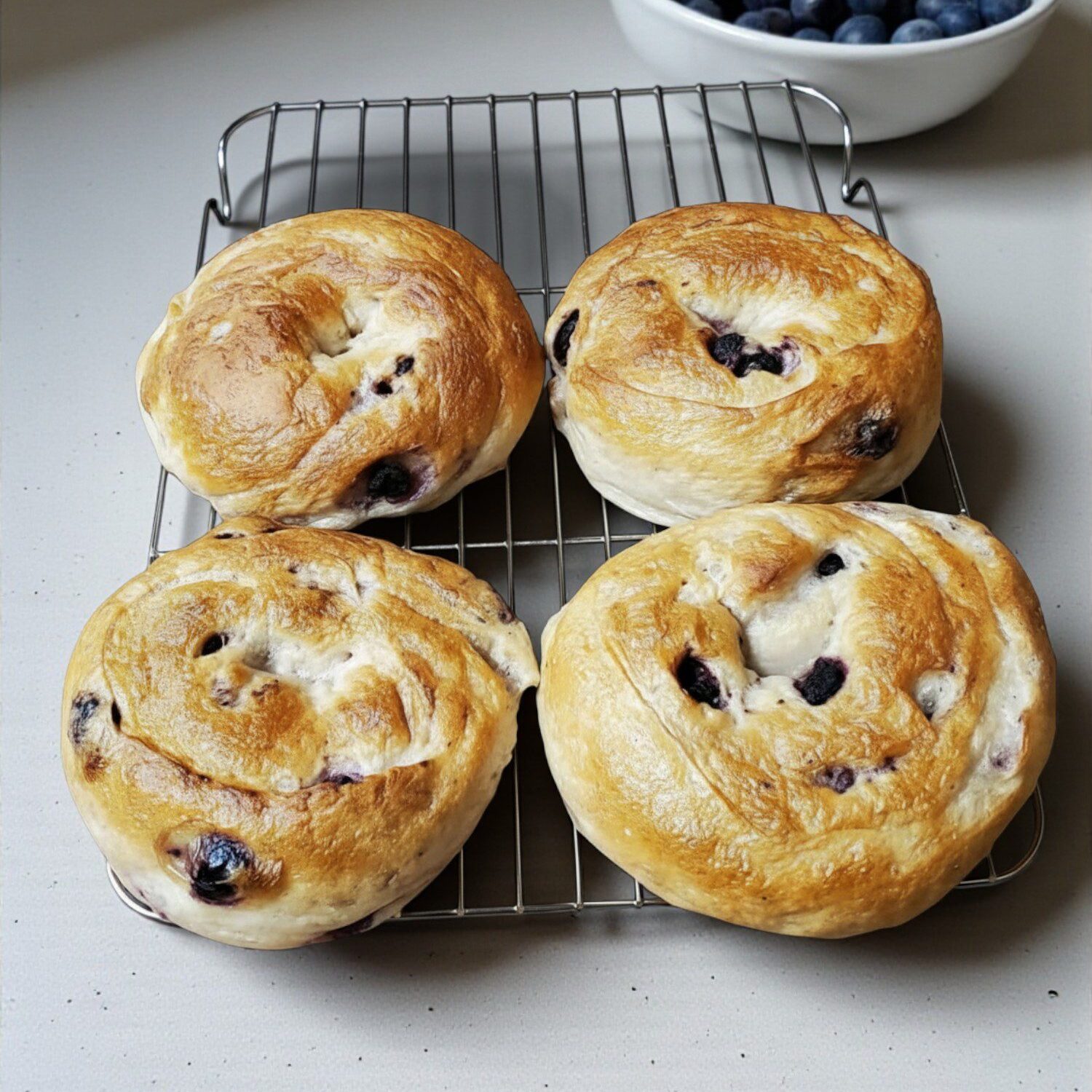
When most people think of sourdough, they picture rustic loaves of bread.
But sourdough starter is incredibly versatile — and one of my favorite ways to use it is in bagels.
These sourdough blueberry bagels have the perfect balance of textures: a chewy crust from the traditional boil and a soft, airy interior thanks to natural fermentation.
The blueberries add a gentle sweetness and a beautiful burst of color throughout the dough.
Why I Use Freeze-Dried Blueberries
Fresh blueberries can release a lot of moisture into bagel dough, which can make shaping difficult.
Freeze-dried berries give you great flavor without adding excess liquid.
Rehydrating them slightly before mixing helps them incorporate into the dough without pulling moisture out of the bagels.
The Role of Fermentation
Just like with sourdough bread, fermentation is what gives these bagels their structure and flavor.
A strong starter and proper fermentation timing create dough that is:
- light
- airy
- elastic
- easy to shape
If you’re new to sourdough, learning to recognize properly fermented dough will make all the difference.
Boiling Bagels the Traditional Way
The short boil before baking is what gives bagels their signature chewy crust.
The honey in the boiling water helps promote a beautiful golden color during baking.
Thirty seconds on each side is just enough to set the outer layer of the dough before the bagels go into the oven.
A Naturally Fermented Breakfast Favorite
These sourdough blueberry bagels are perfect toasted with butter or cream cheese.
And because they’re naturally fermented, many people find sourdough easier to digest than quick-rise breads.
If You’re Just Getting Started with Sourdough
If you’re new to baking with sourdough, having a strong starter makes everything easier.
I use the same organic starter in my kitchen every week when baking bread and bagels.
Sourdough Blueberry Bagels
Soft inside, chewy outside, naturally fermented
Ingredients
- 150 g active sourdough starter
- 24 g sugar
- 250 g water
- 500 g flour
- 9 g salt
- 25 g freeze-dried blueberries
- 1 Tbsp honey (for boiling water)
Instructions
1. Prepare the Blueberries
If making blueberry bagels, place the freeze-dried blueberries in a small bowl.
Lightly spray them with water 5–6 times using a spray bottle, or add a couple tablespoons of water and toss to coat.
This helps rehydrate the berries slightly so they don’t pull moisture out of the dough.
Set aside.
2. Mix the Dough
In a large bowl, combine:
- active sourdough starter
- water
- sugar
- flour
- salt
Mix until a shaggy dough forms. Some dry bits of flour are fine.
Cover the bowl and let the dough rest for 30 minutes.
3. Stretch and Fold
After the rest, perform the first stretch and fold.
If making blueberry bagels, gently fold the blueberries into the dough during this step. They may fall out as you fold — just press them back in as best as you can.
Cover the dough and rest again.
Repeat the stretch and fold process two more times, allowing the dough to rest between each set.
4. Bulk Fermentation
Let the dough continue fermenting until it is:
- nearly doubled in size
- domed on top
- soft and airy
This usually takes about 5 hours total from mixing, depending on your kitchen temperature.
If your house is cooler, fermentation may take 5½ to 6 hours.
5. Cold Rest Overnight
Once bulk fermentation is complete, place the entire container of dough in the refrigerator overnight.
This helps develop flavor and makes the dough easier to shape the next day.
6. Shape the Dough
The next day, turn the dough out onto your work surface.
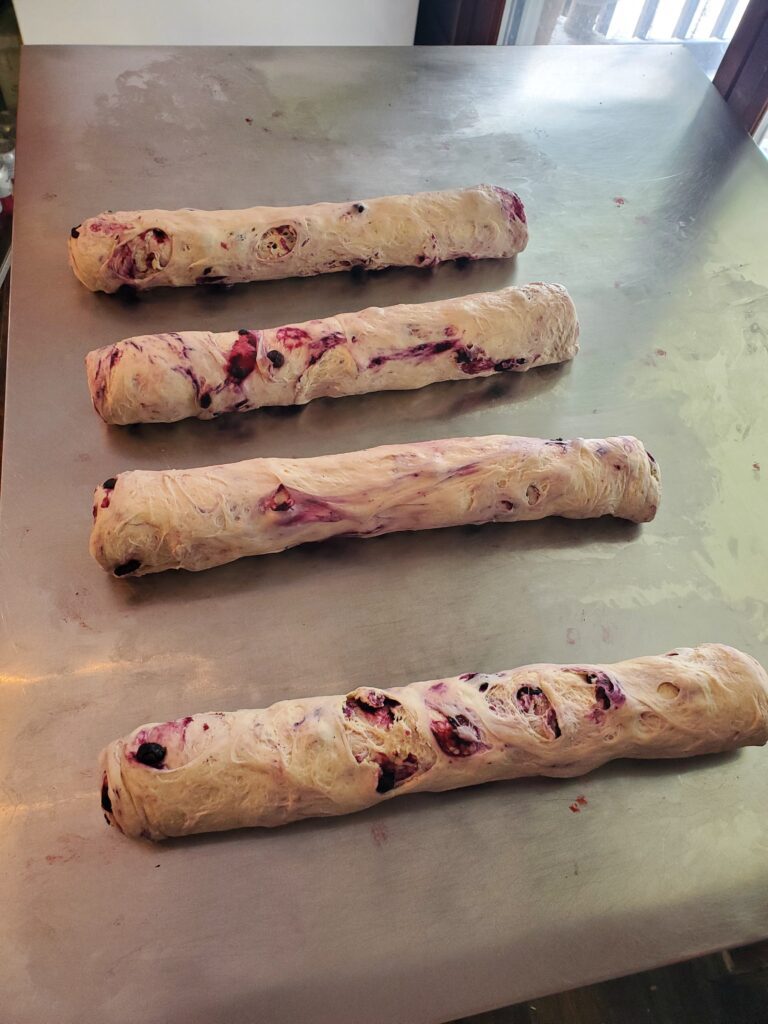
Stretch it into a rectangle roughly 16 inches long and about 5 inches tall.
Roll the long edge of the rectangle into itself to create a long cylinder of dough.
Cut the cylinder:
- first into two 8-inch sections
- then cut each section into four pieces
You should end up with 8 pieces of dough.
Each piece will look like a small round puck.
7. Form the Bagels
Let the dough rest for a minute if it feels tight.
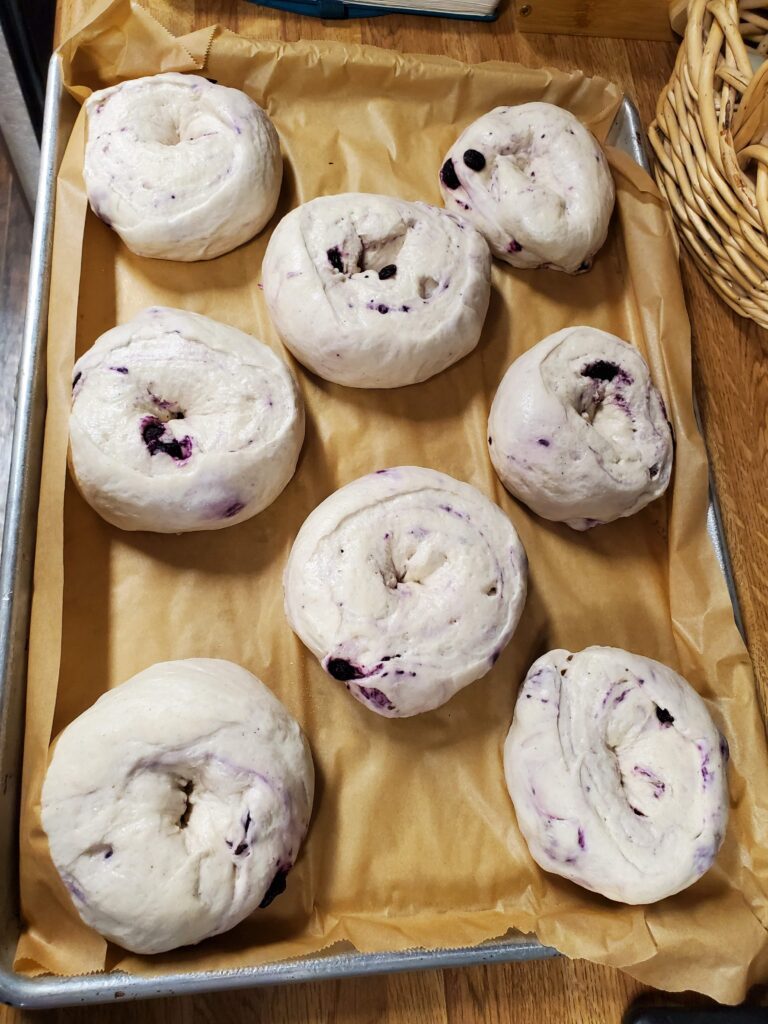
Then poke your finger through the center of each piece and gently stretch the dough into a ring.
Stretch the hole slightly larger than you want the final bagel to be — the dough will naturally shrink back a little.
Place shaped bagels on a parchment-lined baking sheet.
Cover with a damp kitchen towel.
8. Final Rise
Let the bagels rise until:
- puffy
- light
- noticeably larger than when shaped
This usually takes:
- 4–5 hours at room temperature
or
- about 3 hours in a warm spot (such as an oven with the light on).
9. Boiling the Bagels
Preheat oven to 425°F (218°C) to prepare for baking after the boil.
Near the end of the rise, fill a large pot ¾ full with water and add:
1 heaping tablespoon honey
Bring the water to a rolling boil.
Gently lift each bagel and drop it into the boiling water.
Boil:
- 30 seconds on the first side
- flip
- 30 seconds on the second side
Remove with a slotted spoon and place on a parchment-lined baking sheet.
10. Baking
Bake at 425°F (218°C) for 15 minutes.
Rotate the pan if needed to prevent uneven browning.
Bake for an additional 7–8 minutes until golden brown.
Cool and Enjoy
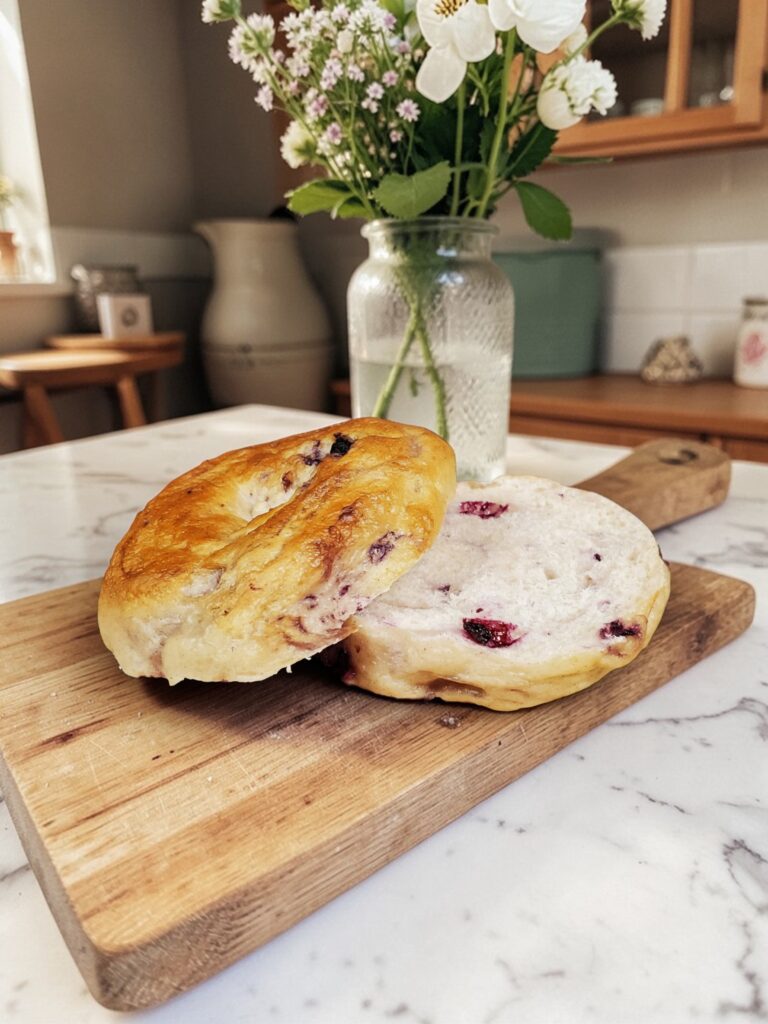
Allow the bagels to cool slightly before slicing.
The inside will be soft and chewy with a lightly crisp crust.
👉 If you’re just getting started, you can find the same dehydrated sourdough starter I use weekly in my working kitchen here:
Tips for Perfect Sourdough Blueberry Bagels
Use an Active Starter
Strong fermentation starts with a healthy sourdough starter. Your starter should be bubbly, active, and at or near peak when you mix the dough. A weak starter can lead to dense bagels that don’t rise well.
Don’t Skip the Overnight Rest
Refrigerating the dough overnight helps develop flavor and makes the dough much easier to shape the next day. The cold rest also helps strengthen the dough structure.
Stretch the Bagel Hole Larger Than You Think
When shaping the bagels, stretch the hole slightly larger than you want the final result to be. The dough naturally shrinks back as it rests and rises.
Handle the Dough Gently
Once the bagels have completed their final rise, they will be light and puffy. Handle them gently when transferring them to the boiling water so you don’t deflate the dough.
The Honey Boil Creates a Chewy Crust
Boiling bagels before baking is what gives them their signature chewy exterior. The honey in the water helps the bagels develop a beautiful golden color in the oven.
Watch Fermentation, Not Just the Clock
Fermentation time can vary depending on the temperature in your kitchen. Look for dough that is soft, slightly domed, and nearly doubled in size before moving to the next step.
Continue Your Sourdough Journey
👉Simple Farmhouse Sourdough Bread Recipe (Beginner-Friendly + Digestible)
Learn the full beginner-friendly process for mixing, fermenting, shaping, and baking sourdough bread.
👉Beginner Sourdough Mistakes: Why Your Loaf Is Flat, Dense, or Gummy (And How to Fix It)
Common reasons sourdough loaves turn out flat, dense, or gummy — and how to fix them.
👉My Exact Sourdough Baking Schedule (How I Make It Work In My Home Bakery)
See how I manage fermentation, shaping, and baking when making dozens of loaves each week.
If you try this recipe, I’d love for you to leave a rating below ⭐⭐⭐⭐⭐— it helps others and supports my small bakery.

Sourdough Blueberry Bagels
Soft inside, chewy outside, naturally fermented
Servings: 8 bagels
Equipment
Ingredients
- 150 grams active sourdough starter
- 24 grams sugar
- 250 grams water
- 500 grams flour
- 9 grams salt
- 25 grams freeze dried blueberries
- 1 heaping Tbsp honey for boiling water
Instructions
Prepare the Blueberries
If making blueberry bagels, place the freeze-dried blueberries in a small bowl.Lightly spray them with water 5–6 times using a spray bottle, or add a couple tablespoons of water and toss to coat.This helps rehydrate the berries slightly so they don’t pull moisture out of the dough.Set aside.Mix the Dough
In a large bowl, combine:active sourdough starterwatersugarfloursaltMix until a shaggy dough forms. Some dry bits of flour are fine.Cover the bowl and let the dough rest for 30 minutes.Stretch and Fold
After the rest, perform the first stretch and fold.If making blueberry bagels, gently fold the blueberries into the dough during this step. They may fall out as you fold — just press them back in as best as you can.Cover the dough and rest again.Repeat the stretch and fold process two more times, allowing the dough to rest between each set.Bulk Fermentation
Let the dough continue fermenting until it is:nearly doubled in sizedomed on topsoft and airyThis usually takes about 5 hours total from mixing, depending on your kitchen temperature.If your house is cooler, fermentation may take 5½ to 6 hours.Cold Rest Overnight
Once bulk fermentation is complete, place the entire container of dough in the refrigerator overnight.This helps develop flavor and makes the dough easier to shape the next day.Shape the Dough
The next day, turn the dough out onto your work surface.Stretch it into a rectangle roughly 16 inches long and about 5 inches tall.Roll the long edge of the rectangle into itself to create a long cylinder of dough.Cut the cylinder:first into two 8-inch sectionsthen cut each section into four piecesYou should end up with 8 pieces of dough.Each piece will look like a small round puck.Form the Bagels
Let the dough rest for a minute if it feels tight.Then poke your finger through the center of each piece and gently stretch the dough into a ring.Stretch the hole slightly larger than you want the final bagel to be — the dough will naturally shrink back a little.Place shaped bagels on a parchment-lined baking sheet.Cover with a damp kitchen towel.Final Rise
Let the bagels rise until:puffylightnoticeably larger than when shapedThis usually takes:4–5 hours at room temperatureorabout 3 hours in a warm spot (such as in an oven with the light on).Boiling the Bagels
Preheat oven to 425℉.Near the end of the rise, fill a large pot ¾ full with water and add:1 heaping tablespoon honeyBring the water to a rolling boil.Gently lift each bagel and drop it into the boiling water.Boil:30 seconds on the first sideflip30 seconds on the second sideRemove with a slotted spoon and place on a parchment-lined baking sheet.Baking
Bake at 425°F (218°C) for 15 minutes.Rotate the pan if needed to prevent uneven browning.Bake for an additional 7–8 minutes until golden brown.Cool and Enjoy
Allow the bagels to cool slightly before slicing.The inside will be soft and chewy with a lightly crisp crust.
Notes
This recipe can be used for plain or other flavored bagels. Just swap out the blueberries for your ingredients of choice.
If you want to make everything seasoned bagels, sprinkle the seasoning mix on right after taking them out of the boil. This helps it stick very well.
Nutrition
Serving: 1bagel
Tags: Recipes
Leave a Comment